


Embrace’s debut album, The Good Will Out, became one of the fastest-selling debut albums by a British artist when it was released in 1998. It was certified gold on the day of release and went on to sell more than half a million copies.
The band have since scored three number one albums and six top 10 singles.
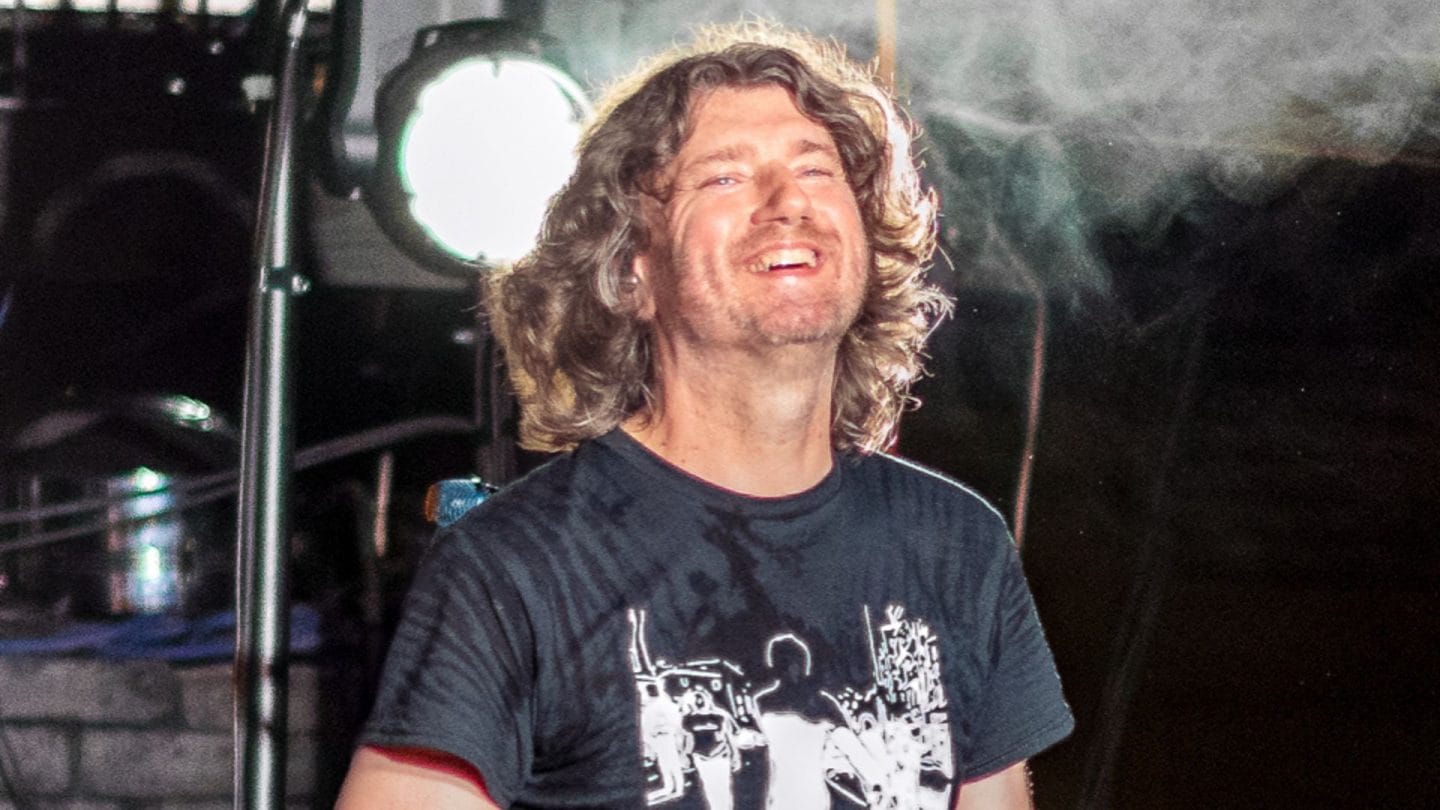
Danny’s upcoming spoken word tour, which begins on September 9, coincides with the release of Good Good People, a companion book packed with the stories, struggles and determination that powered one of Britain’s most enduring guitar bands. And for the first time in years, Danny says he’s finally learned to enjoy it.
“I’m so excited to be going on the road and telling all of these stories,” he says. “I think I’ve realised it’s the ride and not the destination that’s important. That first album went to number one, but we were sort of expecting it to, so we didn’t really celebrate it at the time, which is a real shame. We were always chasing the next thing. Now we enjoy every minute of it.”
That perspective didn’t come easily.
Danny is refreshingly honest about the intensity that defined Embrace’s early years, particularly during the recording of their landmark debut The Good Will Out.
Embrace’s story began in 1990, when Danny and his brother Richard McNamara started experimenting with songs in a small outbuilding at their home in Bailiff Bridge, West Yorkshire.
Working first with a cassette recorder and later a drum machine, they slowly built the foundations of the band’s sound before eventually completing the lineup with keyboardist Mickey Dale, drummer Mike Heaton and bassist Steve Firth.
Back then, Danny says, obsession drove everything.
“On the first album I was just about the work,” he says. “I didn’t really care about anything else, and I didn’t really see other people as human beings. Not myself either. I was horrible to myself.”
The pressure was relentless.
“The first album took over a year to record,” Danny recalls. “We wouldn’t have weekends off, and basically any day off on tour we’d book a studio and go in and do a bit. I didn’t want to waste a minute not trying to make it perfect.”
That drive produced extraordinary results, but at a cost.
“We were always thinking about the next thing, so as soon as the first album was in the bag I was trying to write the second album,” he says. “I used to get off the bus, do the gig, get back on the bus, party all night, go to bed, and then wake up for soundcheck. We were travelling all over the world and I barely saw any of it apart from the inside of venues.”
One of the album’s defining moments, All You Good Good People — the song that inspired the title of the new book, began life as something entirely different.
“That started as an idea called Mike’s Fast, which sounded nothing like All You Good Good People,” Danny says. “We’d spent three months in a room singing over it trying to find something, and then All You Good Good People sort of grew out of that.”
The song’s transformation into an anthem came through a leap of faith with a London producer Danny had never met.
“I remember being on the phone with our manager Tony Perrin saying, ‘If he ruins this song, where does he live?’ Like I was going to go and beat him up,” he laughs. “I was just so possessive about it.”
His manager convinced him to trust the process.
“We went down to London and heard it back and just thought, wow.”
The moment Danny first heard the finished version remains vivid.
“We were stuck in traffic on the way home from London, going the wrong way, and it was boiling sunshine,” he recalls. “We were looking out of the car at homeless people on the streets.
“And because we had All You Good Good People playing, it almost felt like a Fisher King scene where everyone was smiling and dancing and the world had rose-tinted glasses. It just felt amazing.
“And I still feel that way about the song now. It feels inspired. It feels bigger than the band.”
Some of the album’s most memorable moments happened almost by accident.
“The orchestra were tuning up before we started recording and I just thought it sounded incredible,” Danny says. “I was shouting, ‘Quick, record this, record this!’ But by the time we started recording they’d stopped.
“The next time they came in I made sure we were recording before they started tuning up, and that became the intro.”
Not every song came easily.
My Weakness Is None Of Your Business was originally meant to be a B-side.
“I was frantically trying to write lyrics while they were getting the drum sound,” Danny says. “Michelle Gayle had a song called Your Sweetness Is My Weakness and I think that’s where I got the idea for the lyric.
“I didn’t know what to do, so I’d come up with a line and our Rick said, ‘Why don’t you just say hallelujah like Leonard Cohen?’ So I did. And that became one of the verses.”
Danny’s honesty extends well beyond the studio.
“Between the ages of 19 and 22, I had a mental breakdown,” he says. “At the time they said it was post-traumatic stress disorder because I’d had a weird near-death experience in a car.
“I’ve come to understand it a bit more over the years, and actually what I had was a form of OCD called Pure O. It was like three years of absolute horror. It was really bad.”
Through it all, songwriting remained his lifeline.
“If there’s one thing that sets me apart, it’s determination,” he says. “Songwriting was just something I needed to do. I’d sit there with a guitar before I could even play, trying to come up with something as good as Pet Sounds or I Am The Resurrection.”
The making of Embrace’s second album, Drawn From Memory, revealed a different side to the band.
“We were all really great mates as far as I can remember,” Danny says of the sessions at Batsford Manor. “We stayed there for months just partying really. You’d get up at three o’clock, have breakfast and then start playing guitar. We had catering bringing us chicken drumsticks and coffees and drinks.”
By then, Danny admits, he had softened slightly.
“I’d got a girlfriend by then so I was a bit more chilled out, but maybe some of the music suffered as a result,” he laughs.
“But I love Hooligan. It’s fucking ace. It was basically the boys messing around in the studio when I wasn’t there to keep an eye on them. The next day I came in and they were supposed to be working on another song and I was like, ‘No, this is brilliant.’”
Danny’s friendship with Coldplay’s Chris Martin began during this period, when Coldplay supported Embrace at Blackpool Tower Ballroom. “I went out to watch them and I remember hearing ‘Trouble’ and just thinking, oh my God, I wish I had written that, they were amazing. He had massive curly hair back then, and he was dancing around like Sting or something. He looked really uncool and out of place on stage and I just thought, wow. I felt like I was witnessing the beginning of something.”
The third album brought different problems.
“We’d spent so long making the second album that we thought we needed to pull our fingers out and get on with it,” Danny says. “But we didn’t have enough songs. So when we went into the studio, we weren’t ready, and it was hard.”
Then came the phone call that changed everything.
“Our Rick got a phone call from our manager on his birthday and thought, ‘Oh nice, he’s ringing to wish me happy birthday,’” Danny says.
“But it turned out he was ringing to tell us we were looking for a new record deal, which is a nice way of saying you’ve been dropped.
“We were about to play a sold-out Royal Albert Hall and didn’t even have a record deal. It was weird. I genuinely thought that might be the last gig we ever played.”
But Embrace refused to fold.
“We just decided to write another album that was better than anything we’d done before,” Danny says. “We knew we’d have to work hard, but we were confident.”
Along the way, the band’s infamous Secret Gigs became the stuff of legend.
“We did one completely inpitch darkness at Drummonds Mill,” Danny recalls. “We had to rehearse in total darkness for two weeks beforehand. You’d be amazed how hard it is to play your instrument when you can’t see it.
“I had the audience dressed completely in black walking down into the basement holding hands in a line. The only light came from a strobe every few seconds. I’ll never forget it.”
Another event, the Halifax Boxing Club paint gig, nearly ended in disaster.
“The idea was for everyone to throw powder paint into the air, but we tested it out before the gig by throwing one cup and it caused this massive cloud,” Danny says. “We immediately realised we’d made a terrible miscalculation. If we’d thrown 1500 of those into the air at the same time nobody would have been able to breathe. We ended up putting less than a centimetre of paint in each cup.”
Looking back now, Danny sees the journey differently.
“My wife and kids have really helped me,” he says. “I think I gradually joined the human race.”
After decades of platinum albums, setbacks, reinventions and survival, Embrace are still standing, not through luck, but through persistence, ambition and genuine brotherhood.
And as Danny prepares to take these stories back out on the road, he’s finally allowing himself to enjoy the ride.
Danny’s solo spoken word tour starts on September 9. Dates and tickets at awaywithmedia.com/tours/danny-mcnamara
Good Good People is published by A Way With Media this summer. More details at awaywithmedia.com/books